Key takeaway: SR&ED materials are the physical things your experiments are done on or turn into: prototype parts, test blanks, raw stock. You can claim them in two cases. They are consumed (destroyed or left almost worthless by the work) or transformed (built into something that still has value). Consumed materials are the safe claim. Transformed materials earn a credit too, but if the thing they went into is later sold or put to commercial use, the CRA can take the credit back. Tools, test equipment, cleaning supplies and shop power are not materials, however much you used them.
SR&ED materials are where machine builders and other manufacturers often leave money on the table, or claim money they later have to pay back. The rules come from one CRA document, the Materials for SR&ED Policy. It is dense. This post explains it in plain words, with a worked example from a machine shop.
One honest note first. The policy was last revised in December 2014. Since the Budget 2025 changes became law on March 26, 2026, the CRA has shown a banner on it saying its policies "are being reviewed and will be updated soon." The materials rules below are the ones in force today. Check the policy page again before you file, in case it has changed.
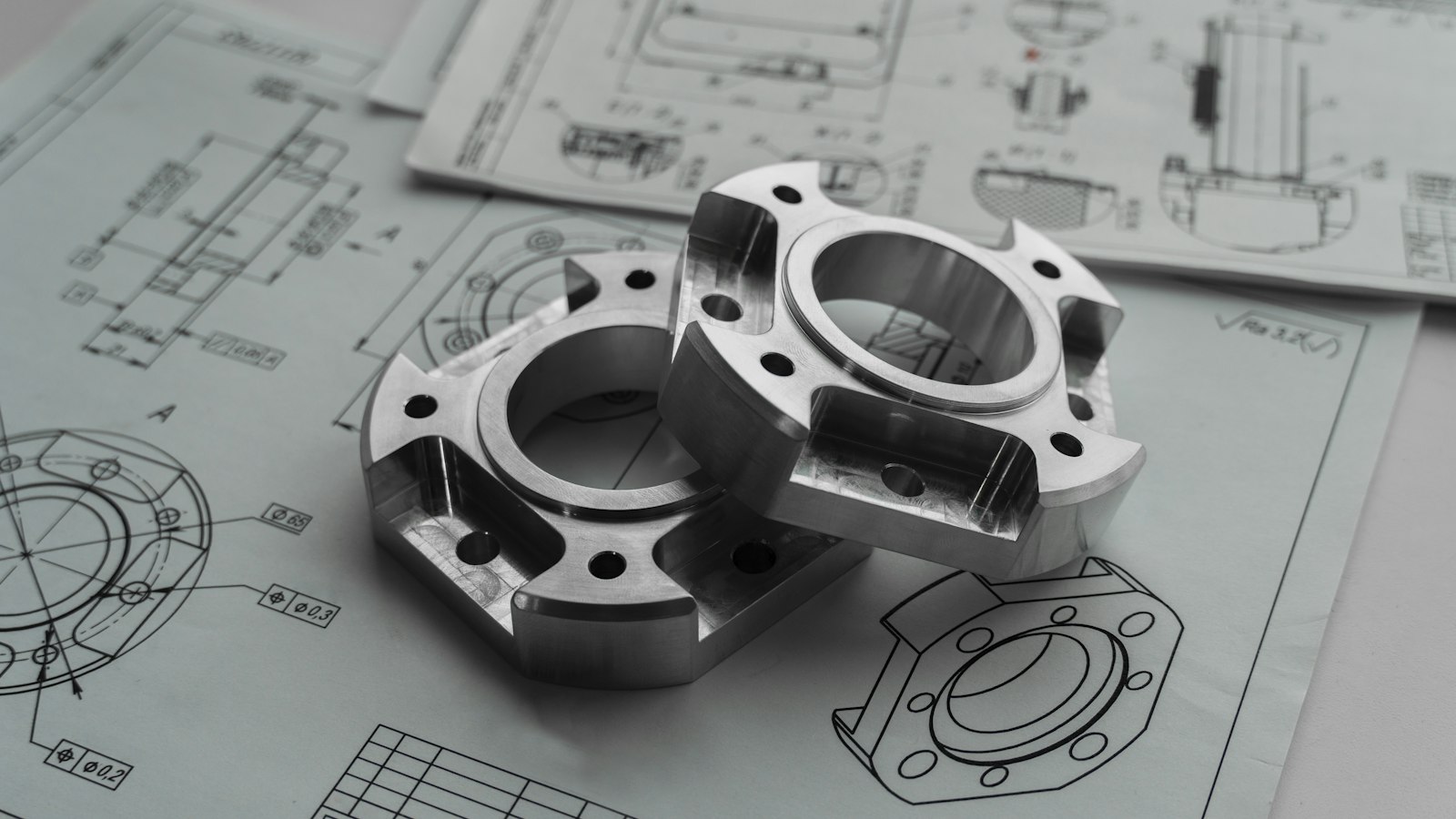
What counts as SR&ED materials
SR&ED materials are physical items that make up the body of the thing your SR&ED is done on, or the thing your SR&ED produces. That is the CRA's test, almost word for word. The policy says materials for SR&ED are "all the raw materials, substances, or other items, that compose the body of a thing at a given moment in the SR&ED process."
Three words in that test do the work:
- Physical. The item must be solid, liquid or gas. Data, software licences and design files are not materials.
- Body. The item has to be part of the object, not something used near it. The steel in a test bracket is part of the bracket. The drill bit that made the holes is not.
- Thing. The object can be the final product, but also an in-between part or a by-product. A sample block you machine only to test a new cutting process counts.
The thing does not have to be the new product itself. If you are developing a new process, the parts you run through that process to test it can be materials. The CRA's own example is a company developing a new way to print on cardboard boxes. The boxes used in the print tests were materials, and so was the ink, because they made up the printed boxes the tests produced.
For a machine builder this matters a lot. Your SR&ED is often about the machine, not the part it makes. But the test parts the machine runs, while you are still working out whether it can hit spec, are also materials.
What the CRA says is not a material
Tools, lab equipment and supplies used while doing the work are not SR&ED materials, even if you used them only for SR&ED. The CRA lists examples in section 4.1 of the policy:
- cleaning products
- glass and plastic lab ware (beakers, vials, dishes)
- microscopes, measuring devices and similar instruments
- filter papers
- "acids, solvents, lubricants, soaps, and other similar items used in processing"
The reason is always the same. These items do not become part of the body of the thing being tested. Cutting fluid cools the tool. It does not become the part.
There is one exception. If the item is itself what you are researching, it can be a material. A company developing a new cutting fluid can claim the fluid it tests.
Energy and water are mostly out too. The CRA says power to run equipment, heat for the building, and water for washing down are "generally not materials." Those costs can be claimed as overhead, but only if you use the traditional method. If you use the proxy method, the proxy amount is meant to cover them, so you do not claim them separately.
The energy exception is narrow. It applies where the energy goes into the reaction itself, such as heat that drives a chemical change or a forming process in plastics, glass or metal refining. For a typical machine shop, the electricity running the test stand is overhead, not a material.
Consumed vs transformed: the one split that decides your risk
Every SR&ED material ends up in one of two buckets. Which bucket it lands in decides whether the CRA can later take the credit back.
Consumed means "destroyed or rendered virtually valueless as a result of the SR&ED." A prototype bracket bent to failure in a load test is consumed. So is a batch of test blanks pressed until they crack, then sent to scrap.
Transformed means the material was "changed or incorporated into another material or product as a result of the SR&ED" and "still [has] some value." A prototype station that works and ends up running on a customer's line is transformed.
You can claim both. Under the CRA's policy, the cost of transformed materials is an allowed SR&ED expense under both the traditional and proxy methods, the same as consumed materials. The difference shows up later:
- With consumed materials, the CRA "generally does not apply the ITC recapture rules," per its production runs policy. Once the credit is earned, it stays earned.
- With transformed materials, if the product that holds them is sold or put to commercial use, the recapture rules can take back all or part of the credit you earned on those materials.
So a transformed-material credit is closer to a loan than a gift if the product goes on to be sold. Plan for that in your cash flow.
The 10% line: scrap value does not ruin a consumed claim
A material still counts as consumed if what is left is worth less than 10% of what it cost. You do not need to throw it in a skip for it to qualify. You can sell the scrap.
The materials policy puts it this way. If 90% or more of a material's cost was used up in the SR&ED, "then the entire cost of the material is allowable as a cost of material consumed." It also says that if experimental production is "sold for more than 10% of the original cost," those materials are not treated as consumed.
The recapture policy uses the same line for scrap sales. When proceeds from selling an experimental product are less than 10% of its total cost, the CRA treats it as a scrap sale and does not apply recapture. Its example: $200,000 spent on salaries, overhead and materials for an experimental product that sold for $10,000 at the end of the project. That is 5%, so there was no recapture.
In practice:
- Sell a failed prototype's steel for scrap at 4% of what the parts cost, and the materials are still consumed.
- Sell rejected test parts as seconds at 30% of their cost, and the materials are transformed, with recapture to come.
Keep the scrap receipts. They are the easiest proof that the 10% line was not crossed.
When to claim: the year you use it, not the year you buy it
You claim SR&ED materials in the tax year they are consumed or transformed by the SR&ED. Not the year you bought them, and not the year you pulled them from stock.
The policy says this directly: the cost can only be claimed "in the year in which the material is consumed or transformed in the prosecution of SR&ED in Canada and not when the material is removed from inventory for use in SR&ED, manufactured (with no experimental development), or received from a supplier."
Two practical results:
- Year-end stock is not a claim. If you bought $30,000 of aluminum in November for tests that run in February, and your year ends December 31, that aluminum goes in next year's claim.
- You must pay on time. Like any SR&ED expense, materials only earn an investment tax credit if you pay for them in the tax year or within 180 days after it ends, per the same policy. An unpaid supplier invoice at day 181 drops out.
If your stock records cannot show when material went into a test, fix that before the next build. A simple job number on every SR&ED issue from stores does the job.
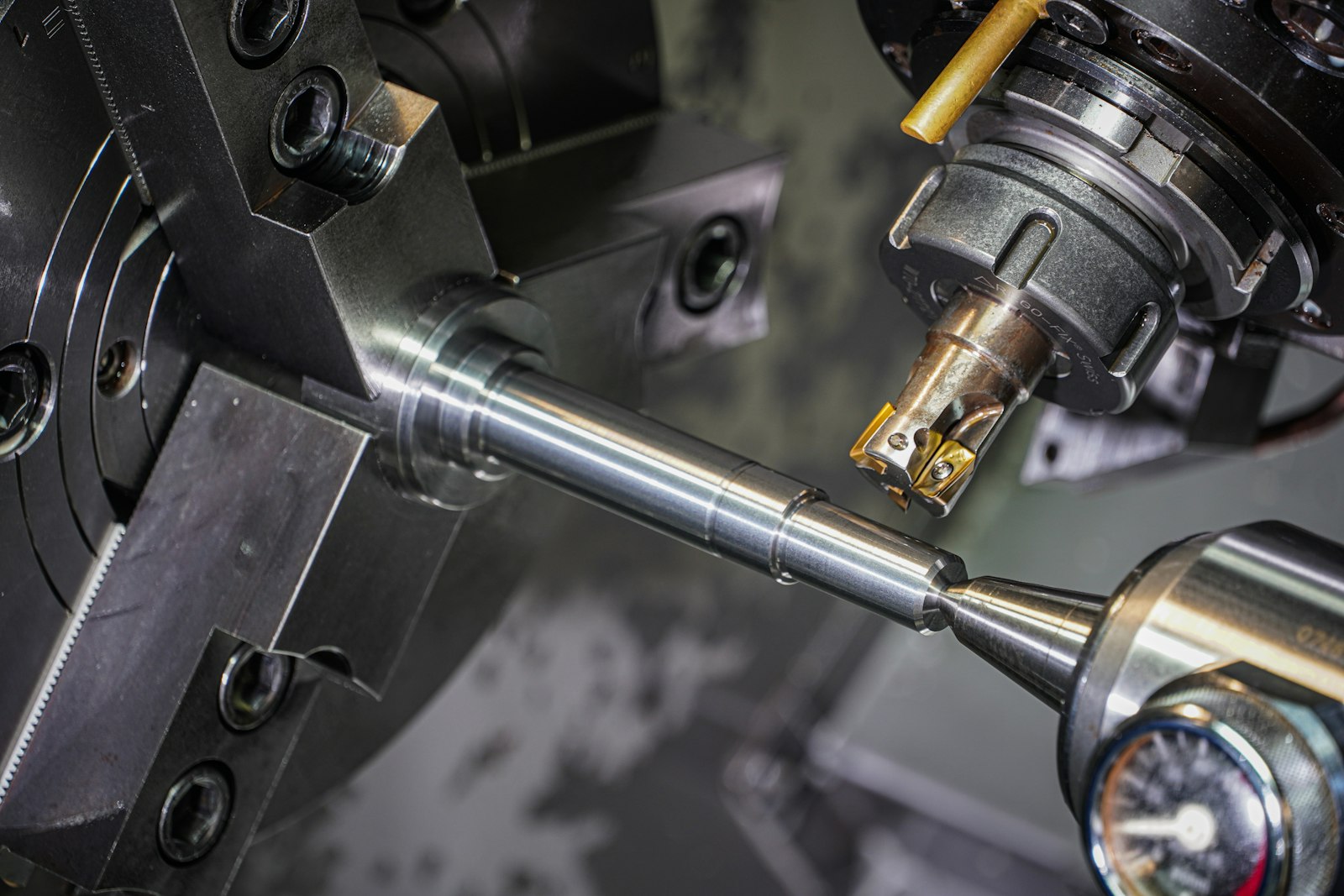
What "cost" means for a material
The cost of an SR&ED material is its laid-down cost: what you paid plus what it took to get it ready for the test. The policy lists "invoice cost, custom and excise duties, transportation, other acquisition costs, and storage costs."
Two cases come up a lot in manufacturing.
Parts you make yourself. If you make a part in-house and then use it in SR&ED, its cost can include material, direct labour and a share of production overhead. The making must not itself involve SR&ED. In the CRA's cardboard example, a box that cost $1.00 to make ($0.50 materials, $0.30 labour, $0.20 overhead) counted at the full $1.00, even for a company using the proxy method.
Outside services to get a part ready. If a part has to be coated, heat-treated or galvanized before you can test it, the service cost becomes part of the material's cost. The CRA's example is metal parts sent out for galvanizing before destructive testing. The galvanizing was not SR&ED, but the cost of the galvanized parts, metal plus galvanizing, counted as consumed materials.
One more rule. If you buy materials from a related company (non-arm's length), you can claim what you paid. But the tax credit is based on what it cost the related company, without its profit, per section 3.1 of the policy.
A worked example from a machine shop
This example is made up to show how the rules work. The company, project and numbers are not real.
Say you run a shop in Ontario that builds special-purpose machines. A customer needs a press-fit station that holds a tolerance your standard design cannot reach. Nobody, including your own engineers, knows whether a servo-driven press can hit it at the line speed the customer needs. That is a real technical unknown, so the work is a good SR&ED candidate. (Eligibility is a separate test. Our eligible activities guide covers it.)
Over the year, the project uses the following.
Prototype head 1: $18,000 in parts. It cracks during a load test. You sell the remains for $900 in scrap. That is 5% of cost, under the 10% line, so the full $18,000 is consumed.
Test blanks: 400 at $12 each, so $4,800. You press them to find where the fit fails, then scrap all of them. $4,800 consumed.
Prototype head 2: $40,000 in parts. It works. After more testing it ships to the customer as part of their line. It still has value, so the $40,000 is transformed.
A torque sensor for the test stand: $6,500. It stays in your shop after the project. This is equipment, not a material. It never became part of the body of the press head. See the equipment section below.
Power for the test stand: about $3,000. Not a material. Under the traditional method it may count as overhead. Under the proxy method it is not claimed separately.
So the materials claim is $18,000 + $4,800 + $40,000 = $62,800.
If you are a Canadian-controlled private corporation under the expenditure limit, the enhanced credit rate is 35%. On materials alone that is $62,800 × 35% = $21,980 in federal credit for the year.
Now the station ships. Say the press head is priced at $95,000 on the customer's invoice. Recapture is the lesser of two amounts:
- the credit you earned on that property: $40,000 × 35% = $14,000
- the same rate times what you sold it for: $95,000 × 35% = $33,250
The lesser amount is $14,000, and it is added to your tax for the year of the sale. You keep the $7,980 of credit on the consumed materials ($22,800 × 35%). The $14,000 on the transformed head goes back.
Two points from the example:
- Labour is safe. The CRA says the recapture rules "do not apply in respect of SR&ED labour costs and overhead expenditures." Your engineers' time on head 2 still earns its full credit. Only the materials credit goes back.
- Provincial credits reduce the federal base. An Ontario credit on the same costs lowers what the federal 35% applies to. Our grind rule post shows how. Do not add the rates together.
If the customer paid you to develop the station, there is one more layer. Payments from a customer for the work can reduce what you can claim. Read our contract expenditures post before you count on the full number.
Parts in a machine you keep or sell
A part you develop and build into a machine can be claimed as a transformed material, even if the machine itself is a capital asset. That is the CRA's own example.
In section 4.0 the policy says that "a new engine, being the subject of the SR&ED, incorporated in a machine that is a commercial asset would be treated as materials for SR&ED." It then warns that when that machine "is sold or converted to commercial use," recapture may apply to the credit on the engine.
The policy's weaving-machine example makes the same point. A textile maker modified a weaving machine to run faster and then used it in production. The new parts could be claimed as materials. The whole machine could not, because a machine is not a current expense. When the machine went into commercial use, the credit on those parts was open to recapture.
For machine builders that is the normal case. You develop a new module, it works, and it goes into a machine you sell. Claim the module's parts as transformed. Expect recapture on them when the machine ships.
The policy also limits what counts. For a custom product or commercial asset, the CRA "will not automatically allow all of the costs of material transformed." Only the materials actually changed by the SR&ED count. A standard frame, guarding and wiring you would have used anyway are not SR&ED materials just because the new module sits inside them.
Materials on a production line
When you test a change on your live production line, the rules depend on whether the run was experimental or mostly commercial. The CRA's production runs policy splits runs into two kinds.
Experimental runs (the CRA calls them ED+EP). The run exists to test the change, and there is real technical risk to the process or product. The policy lists signs of this, such as written experimental operating instructions, extra engineering supervision, smaller-than-normal quantities, or a line set aside for the test. In these runs, materials consumed are allowed, and materials transformed into the needed test output are allowed. Material for output beyond what the test needed ("excess production") is not.
Commercial runs with a test inside (ED+CP). You are making product for sale and trying a change at the same time, with care taken not to disturb normal output. Here only the extra material caused by the experiment counts. The policy is blunt: "the fact that standard materials (those normally used for commercial production) are required for the prosecution of experimental development does not make their cost an allowable SR&ED expenditure."
A fair way to measure the extra, per the policy, is "the cost related to the actual loss of materials minus the cost related to the standard loss of materials." If your line normally scraps 2% and the trial weeks scrapped 9%, the extra 7% is your consumed-materials claim.
You can only show that difference if you know your normal scrap rate. If you do not track it, start before the next trial, not after.
One more point. Whether you later sell the output does not decide which kind of run it was. The CRA says the sale, "whether it results in a profit or a loss," does not settle it. Your records from the time of the run do.
Jigs, fixtures and test equipment
A jig or fixture that holds parts during testing and then stays in your shop is usually equipment, not a material. It works like the measuring tools the CRA lists. It is used on the thing being tested but does not become part of it.
The CRA's materials policy says buying equipment is generally "an expenditure of a capital nature," not a current one. That used to mean such costs were out of SR&ED completely.
That changed. Under the Budget 2025 changes, "eligible SR&ED capital expenditures made after December 15, 2024, can be claimed," per the CRA's SR&ED updates page. So the torque sensor in the example may still earn a credit, but under the capital rules, not the materials rules. The two have different refund terms. Our hardware post covers the capital side.
There is one case where a fixture is a material. If the fixture is what you are developing, for example a new self-aligning clamp that is the point of the project, its parts are what the SR&ED is done on. Those parts can be claimed as materials, consumed or transformed depending on what happens to them.
Records that make a materials claim stand up
A materials claim holds up in a review when you can trace each dollar from the invoice to the test it was used in. The CRA calls the question of what counts "a question of fact that can only be made on a case-by-case basis." Facts mean records.
Keep these, from the start of the project:
- A job or project number on every purchase and stores issue for SR&ED work, so the material can be traced to the project.
- A test log that names the prototype or batch, what was tested, and what happened to it: destroyed, scrapped, reworked, kept or shipped.
- Scrap receipts or weigh tickets for anything sold as scrap, to show you stayed under 10%.
- Your normal scrap rate for any line where you run trials during production.
- Shipping and sales records for any prototype that later goes to a customer, because those trigger recapture.
None of this is new paperwork for a well-run shop. Most of it is already in your ERP, travellers and QC logs. The work is linking it to the SR&ED project while the project is running, not rebuilding it at filing time.
This is the part Glauq is built for. We pull project records together as the work happens, and an independent SR&ED expert reviews the claim and stands behind it before it goes to the CRA. You can check whether your work qualifies in a few minutes.
Who can skip this
If your SR&ED is mostly design and engineering time, with few physical builds, materials will be a small line. Put your effort into salaries and the technical write-up instead. Our T661 guide covers that.
If every prototype you build ends up sold to a customer, your materials credit will mostly come back as recapture. You still claim it, because the timing helps cash flow and the labour credit is not affected. Just do not plan on keeping it.
Frequently asked questions
Can I claim prototype parts for SR&ED? Yes, if the prototype was built and tested as part of eligible SR&ED work. Parts in a prototype that is destroyed or left almost worthless by testing are consumed materials. Parts in a prototype that still has value, for example one later sold or used in production, are transformed materials. Both count, but transformed materials can face recapture when the prototype is sold or put to commercial use.
What is the difference between materials consumed and materials transformed in SR&ED? Consumed materials are destroyed or left virtually valueless by the SR&ED, meaning anything left is worth less than 10% of their cost. Transformed materials are changed or built into something that still has value. The CRA generally does not apply recapture to consumed materials. It can apply recapture to transformed materials when the product holding them is sold or converted to commercial use.
Can I claim scrap from SR&ED testing if I sell the scrap? Yes. If what you get for the scrap is less than 10% of the material's cost, the CRA still treats the full cost as consumed, and there is no recapture. If you sell it for more than 10%, the material is treated as transformed instead.
Do cutting tools, lubricants and shop power count as SR&ED materials? No. The CRA lists lubricants, solvents, cleaning products and measuring tools as items that are not materials, because they do not become part of the thing being tested. Power used to run equipment is not a material either. Some of these costs can be claimed as overhead under the traditional method. Under the proxy method they are covered by the proxy amount.
When do I claim SR&ED materials: when I buy them or when I use them? When you use them. The CRA says the cost is claimed in the tax year the material is consumed or transformed in the SR&ED, not when it is bought or taken from inventory. You also need to have paid for it within 180 days after the end of the tax year.
Does the CRA take back the credit on labour if a prototype is sold? No. The CRA says the recapture rules do not apply to SR&ED labour costs or overhead. Only the credit earned on materials transformed into the product, and on certain property, can be recaptured.
Want to know what your materials and labour could be worth? Try the SR&ED calculator, read the SR&ED guide for 2026, or see if your project qualifies.